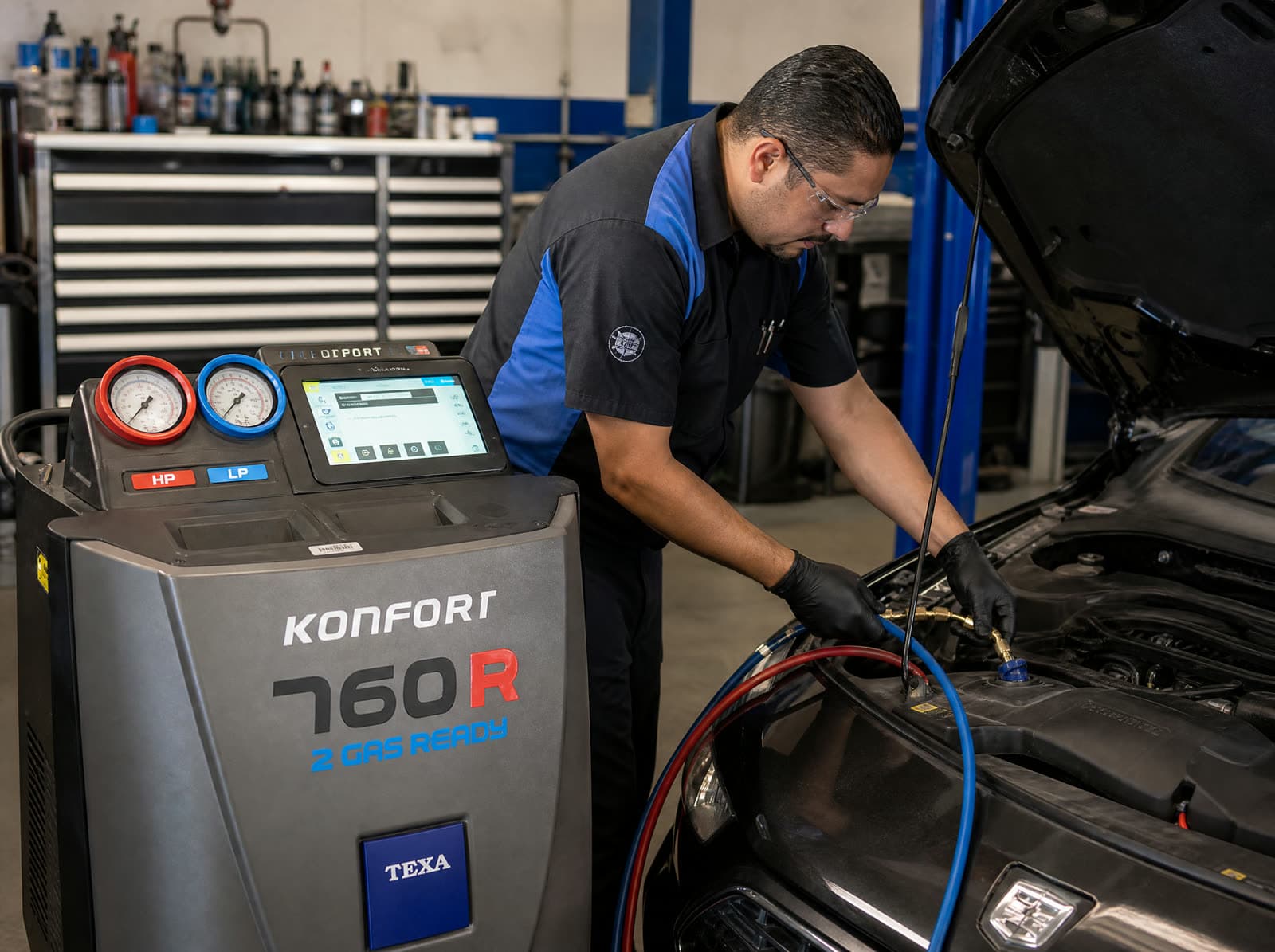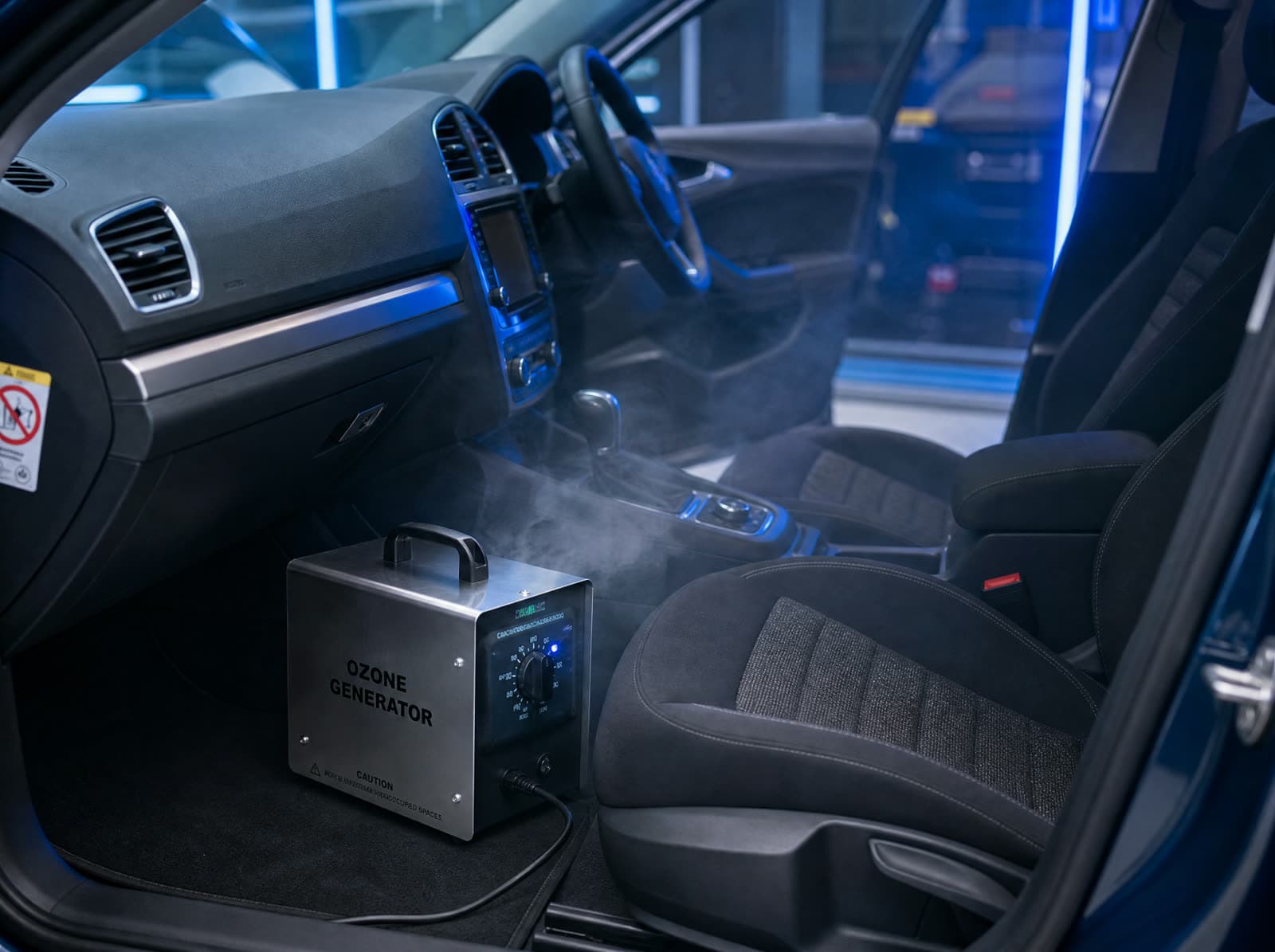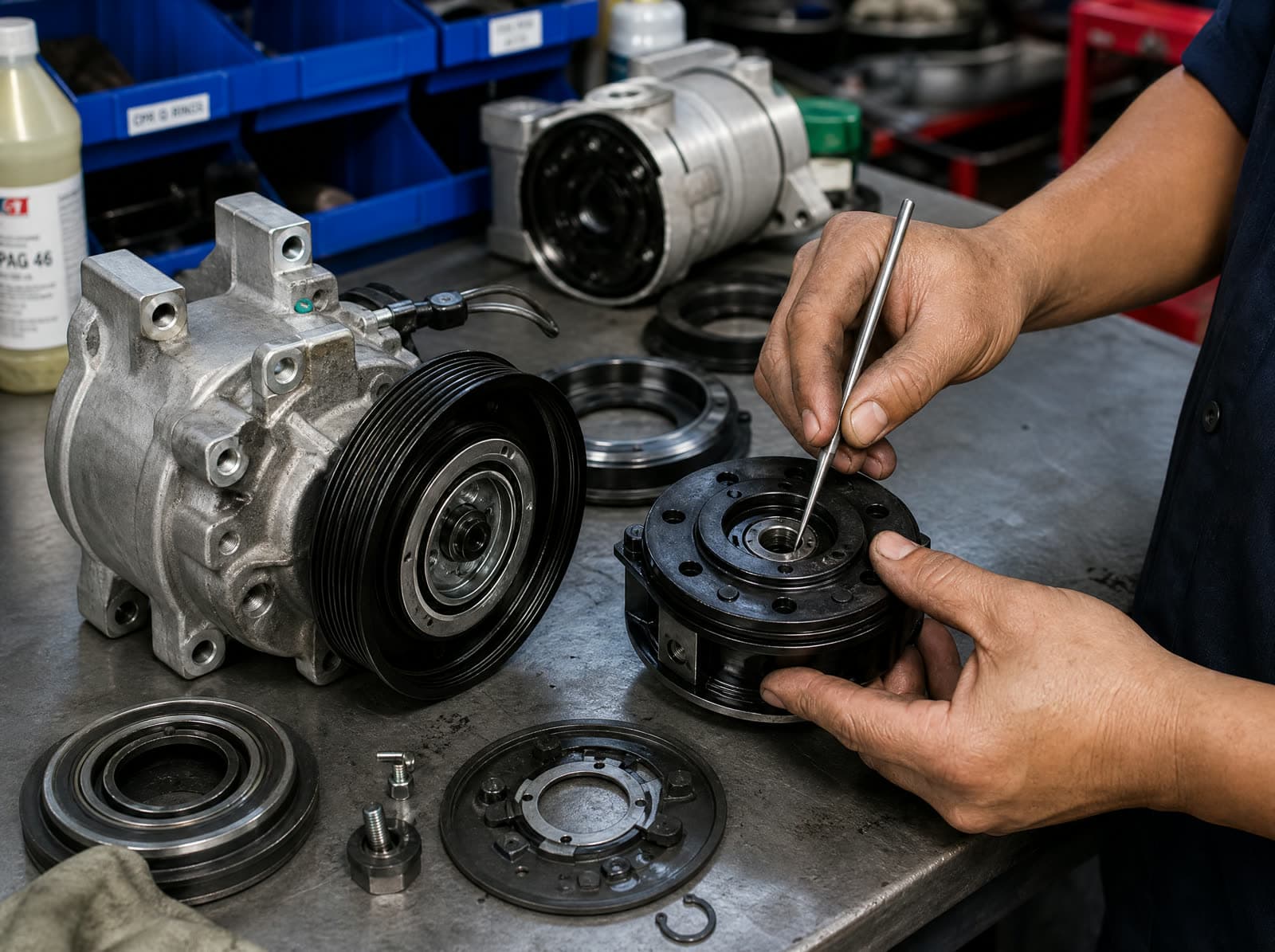
Refrigerant leaks are one of the trickiest problems in an AC system. You might recharge, and a month later the refrigerant has leaked out again. The key is finding exactly where the leak is, and that's where UV testing makes the difference.
What Is a UV Test?
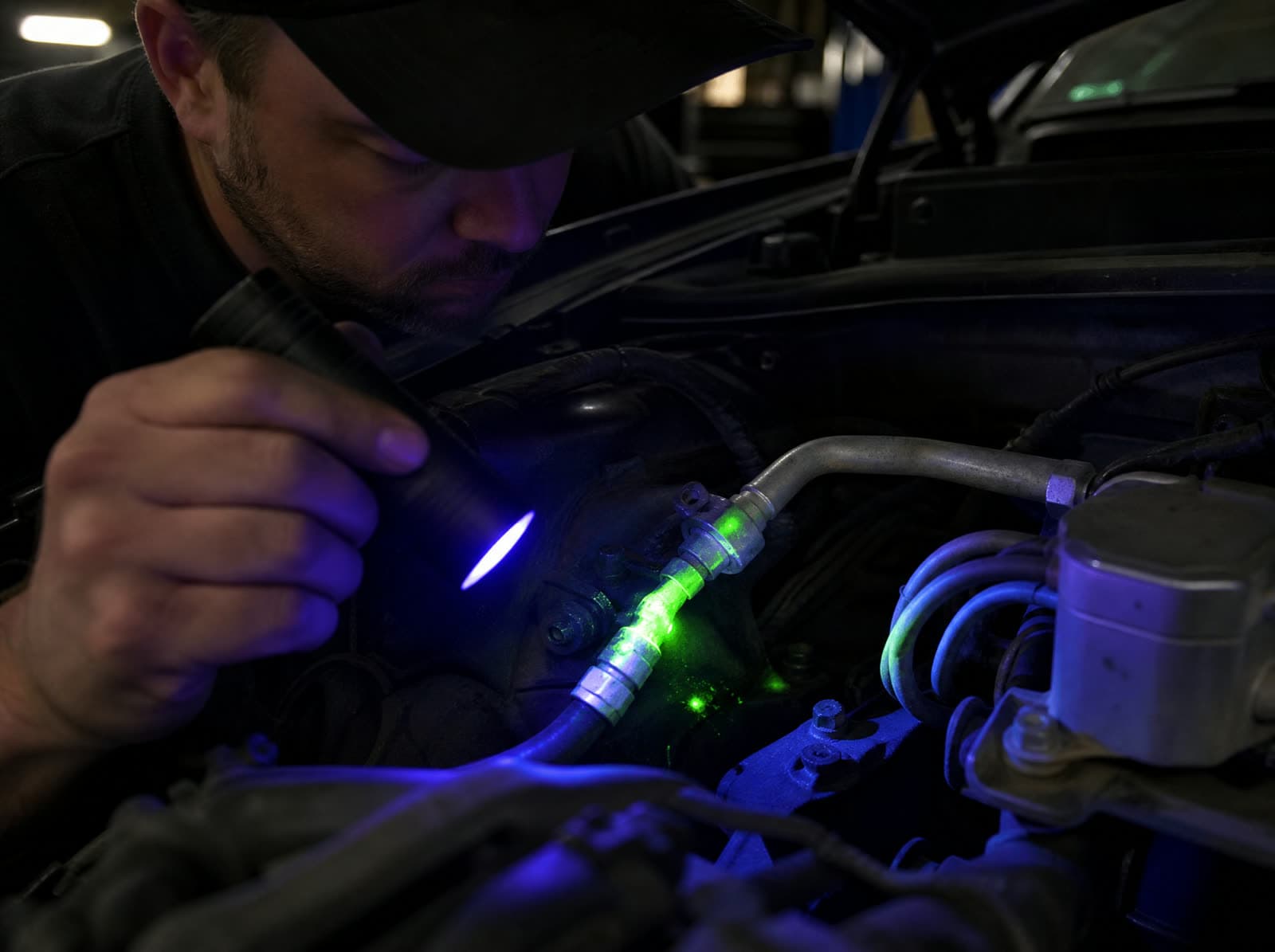
A UV test (ultraviolet test) is a leak detection method where a special fluorescent dye is added to the AC system. This dye circulates together with the refrigerant and oil. When there's a leak, the dye escapes with the refrigerant and leaves a trace. Using a UV lamp (black light), the technician scans all fittings, hoses, the condenser, evaporator, and compressor. Where there's a leak, the dye glows bright yellow-green, even with leaks of just a few grams per month.
Soap Test: The Old Method
In a soap test, soapy solution is applied to suspected areas and observed for bubbles. The method is simple and cheap but has serious limitations. It only detects leaks when there's sufficient pressure in the system. It can't find micro-leaks (under 20-30g per year). It doesn't work in hard-to-reach areas. It's ineffective for evaporator leaks, which are hidden behind the dashboard.
Electronic Detector: The Middle Ground
An electronic detector senses refrigerant molecules in the air. It's more sensitive than the soap test and can find smaller leaks. But it has weaknesses too: it's sensitive to wind and ventilation, gives false alarms in contaminated environments, and shows the leak zone but not the exact point. We use it at HOT22 as a first screening. It's quick and convenient, but when we need to be 100% certain, we turn to UV testing.
Having a similar issue? Contact us for quick diagnostics.
When Should You Choose a UV Test?
We recommend UV testing in these situations: when you've recharged 2+ times in the past year and refrigerant keeps leaking; when the electronic detector can't pinpoint the exact leak location; when an evaporator leak is suspected; when buying a car with AC that "doesn't hold" refrigerant; and for more expensive repairs, to make sure you're fixing the right spot.
Accuracy Comparison
The soap test only catches larger leaks and only with enough pressure in the system. The electronic detector is more sensitive but shows the general area, not the exact point. The UV test pinpoints the leak itself, even at a loss of a few grams per month. The difference is clear: UV testing is the industry gold standard.
At HOT22, we offer UV leak testing as part of our diagnostics. If you have a recurring refrigerant leak problem, don't rely on the "recharge and hope" approach. Visit us. We'll find exactly where the leak is and fix it. Call 089 338 3443.